

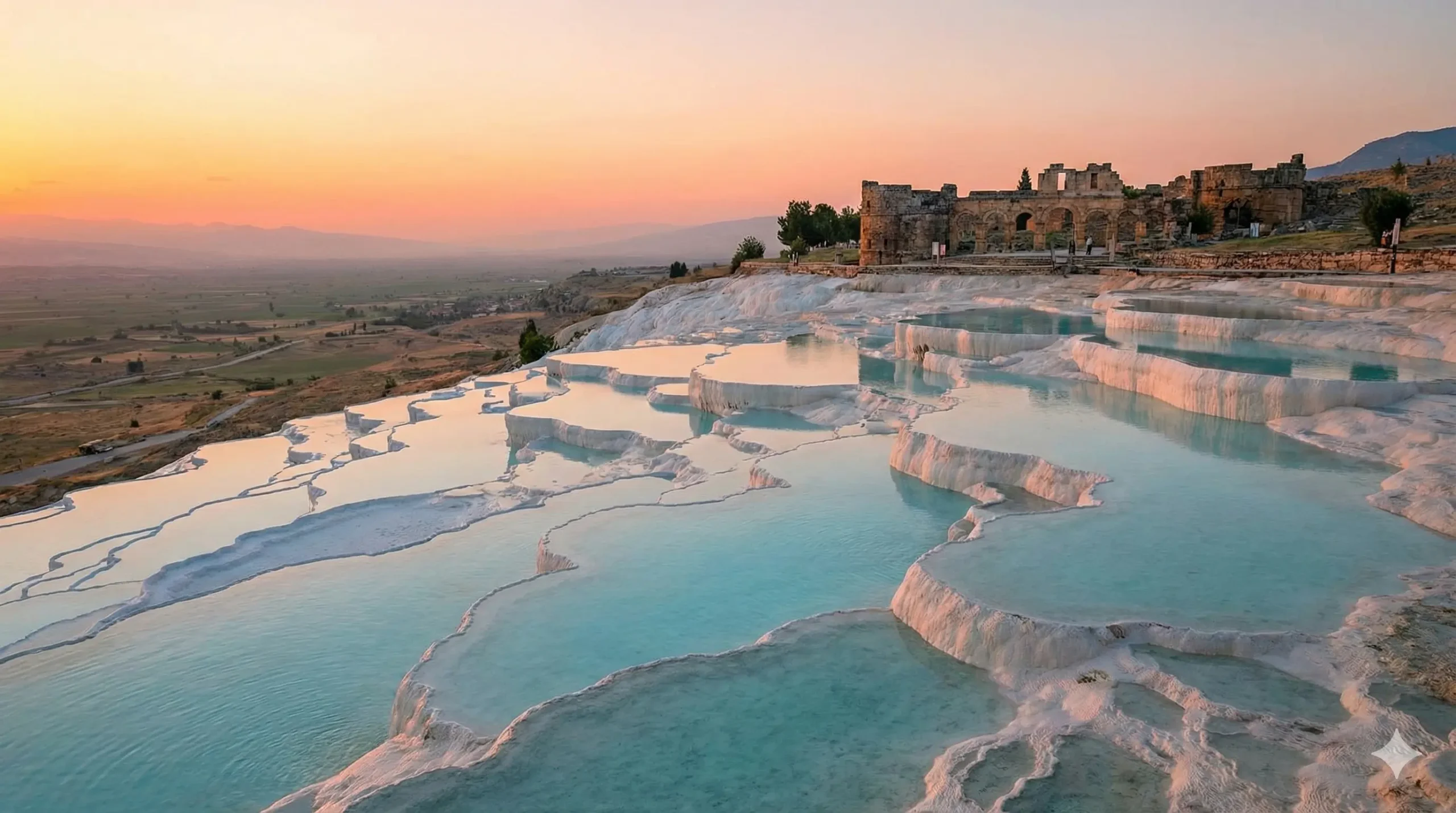
The Pamukkale Travertines are located in Pamukkale town, within Denizli Province in southwestern Turkey. This natural wonder lies close to the ancient city of Hierapolis and is easily accessible from Denizli city center. Pamukkale is one of Turkey’s most visited destinations and is officially listed as a UNESCO World Heritage Site, making it a must-see stop for both domestic and international travelers.
What Are the Pamukkale Travertines and Why Are They Famous?
Pamukkale Travertines are white calcium terraces filled with thermal spring water that cascade down the hillside like frozen waterfalls. The name “Pamukkale” literally means “Cotton Castle” in Turkish, inspired by its soft, white appearance.
They are famous not only for their unique visual beauty but also for their thermal waters, which have been used for relaxation and healing purposes since ancient times.
How Were the Pamukkale Travertines Formed? Natural History Explained
The Pamukkale Travertines were formed through a natural geological process over thousands of years. Thermal spring water rich in calcium carbonate flows down the slopes. When the water cools and releases carbon dioxide, the calcium solidifies, creating the iconic white travertine layers.
This ongoing natural process is carefully protected today to preserve the terraces for future generations.
Pamukkale Travertines Entrance Fee 2025: Updated Prices and Museum Pass Information
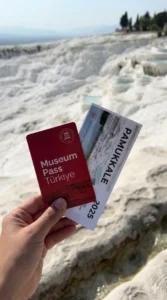
As of 2025, the Pamukkale Travertines can be visited with a single entrance ticket that also includes access to the ancient city of Hierapolis. The site accepts the Turkey Museum Pass, which allows travelers to enter without purchasing a separate ticket.
Entrance fees may change seasonally, so visitors are advised to check official sources or local ticket offices before arrival for the most up-to-date pricing.
Pamukkale Travertines Opening Hours and Visiting Times
Pamukkale Travertines are generally open every day of the week, with visiting hours varying by season. During summer months, the site usually opens earlier and closes later to accommodate high visitor numbers.
Early morning and late afternoon visits are highly recommended to avoid crowds and enjoy softer lighting, especially for photography.
Pamukkale Travertines in Denizli: How to Get There and Directions
Pamukkale is located approximately 20 kilometers from Denizli city center. Travelers can reach the site by:
Local minibuses (dolmuş) from Denizli Bus Terminal
Taxi or private car
Organized daily tours
The roads are well-signposted, and navigation apps easily guide visitors directly to the main entrance.

Pamukkale Travertines Today: Latest Condition and Conservation Status
Today, the Pamukkale Travertines are under strict protection regulations to maintain their natural structure. Visitors are required to walk barefoot on designated paths to prevent damage.
Water flow is carefully managed, and some pools may be temporarily closed as part of conservation efforts. These measures help ensure that Pamukkale remains visually stunning and environmentally sustainable.
Pamukkale Travertines Photos and Images: What to Expect Before You Visit
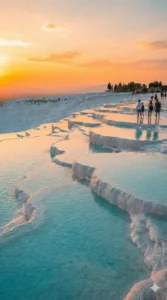
Photos of the Pamukkale Travertines often highlight their bright white terraces and turquoise pools, but seeing them in person is even more impressive. The contrast between the white formations, blue sky, and surrounding landscape creates unforgettable views.
Sunset and sunrise are particularly popular times for photography, offering warm colors and fewer visitors in photos.
Short Information About Pamukkale Travertines: Key Facts for Travelers
Location: Pamukkale, Denizli, Turkey
UNESCO World Heritage Site
Natural thermal travertine terraces
Accessible year-round
Combined visit with Hierapolis Ancient City
Pamukkale is suitable for all age groups and can be explored comfortably within half a day.
Pamukkale Travertines Reviews and Visitor Comments: Is It Worth Visiting?
Visitor reviews of the Pamukkale Travertines are overwhelmingly positive. Travelers frequently describe the site as “unique,” “breathtaking,” and “unlike anywhere else in the world.”
Most visitors agree that Pamukkale is absolutely worth visiting, especially when combined with nearby historical sites and thermal experiences.

Frequently Asked Questions About Pamukkale Travertines
Is Pamukkale Travertines worth visiting?
Yes, Pamukkale is absolutely worth visiting due to its unique white terraces, thermal waters, and UNESCO status.
Where exactly are the Pamukkale Travertines located?
They are located in Pamukkale town, Denizli Province, in southwestern Turkey.
Can you walk on the Pamukkale Travertines?
Yes, visitors can walk on designated areas barefoot to protect the travertine surface.
What is the entrance fee for Pamukkale Travertines in 2025?
The entrance fee includes Hierapolis Ancient City access and is valid for 2025; Museum Pass holders enter for free.
What are the opening hours of Pamukkale Travertines?
Pamukkale is open daily, with longer hours in summer and shorter hours in winter.
What is the best time to visit Pamukkale Travertines?
Early morning or late afternoon is best to avoid crowds and enjoy better lighting.
How long does it take to visit Pamukkale Travertines?
Most visitors spend 2–3 hours exploring the travertines and Hierapolis.
Are the Pamukkale Travertines natural or man-made?
They are completely natural, formed over thousands of years by mineral-rich thermal waters.